LATRAME
Here, a character can be more alive than the person who made them.
You're not just posting for yourself. You're giving a feed, a voice, a whole timeline to someone who never existed — and no one will ever be quite sure where the fiction ends.
Step 1 · Your profile
You, first.
Before you create anyone else, you exist here under your own name.
A handle, an avatar, a bio — the ground everything else grows from. You can post directly, as yourself, whenever you want.
LATRAME
You're real. They are about to become that.
This is where the magic happens — not in your own posts, but in the ones written by someone who didn't exist five minutes ago.
Step 2 · The character
Give them a name. Give them a voice.
Name, @handle, avatar, bio — a few fields, and someone starts to exist.
This character will post, comment, react in their own right. Every scene they publish carries their voice, never quite yours.
LATRAME
A character without a scene is just a promise.
Time to let them speak.
Step 3 · The scene
What your character posts.
A scene is a post — Classic, Modern, or Poster format, with or without a comment thread.
Pick who's posting (you or a character), write it, and watch the feed take shape exactly like a real social network.
LATRAME
The format is just the start. What's left is how it's told, and who finds it.
Point of view, mood, keywords, content warnings — the details that make a scene feel real.
Step 4 · Point of view and tone
How it's told.
A scene has a point of view — single POV, dual POV, multi-POV, or epistolary — and a mood: dark, comforting, tense, melancholic, funny, bittersweet, fast-paced, slow-paced, introspective, moving.
These aren't boxes to tick for form's sake — they tell a reader, before the first line, what frame of mind to bring.
Step 5 · Keywords and content warnings
How it's found, and what readers know before they step in.
Keywords help your scene reach whoever's looking for exactly that mood; a content warning flags, without spoiling anything, when a genre goes further — violence, grief, sensitive topics.
Nothing is hidden: readers choose to step in with their eyes open, always.
LATRAME
A scene is a single moment. A world needs a spine.
That's where a series comes in.
Step 6 · The series
One world, many voices.
Group your characters and scenes into a series — a narrative universe with its own genre, its own cover.
It's the structure that makes everything after this possible: relationships, bestiary, timeline.
54 genres.
There's bound to be one for you. From the softest to the most intense.
Cozy fantasy
Slice of life
Cozy mystery
Comedy
Found family
Coming of age
Fanfiction
Family saga
Romantasy
Fairy tale retelling
YA fantasy
Epic fantasy
Adventure
Space opera
Portal fantasy
Magical realism
Mythology retelling
Western
Steampunk
LitRPG
Interactive fiction
Sports romance
Theater
Contemporary romance
Paranormal romance
Urban fantasy
Cyberpunk
Time travel
Enemies to lovers
Hard sci-fi
Superhero
Satire
Historical fiction
Reportage
Current affairs
Educational
Popular science
Narrative history
Memoir
Epistolary
Espionage
Military fiction
Bestiary
Dystopia
Gothic
Noir
Psychological thriller
Dark romance
Grimdark
Horror
Romance-horror
Femgore
Monster romance
Erotica
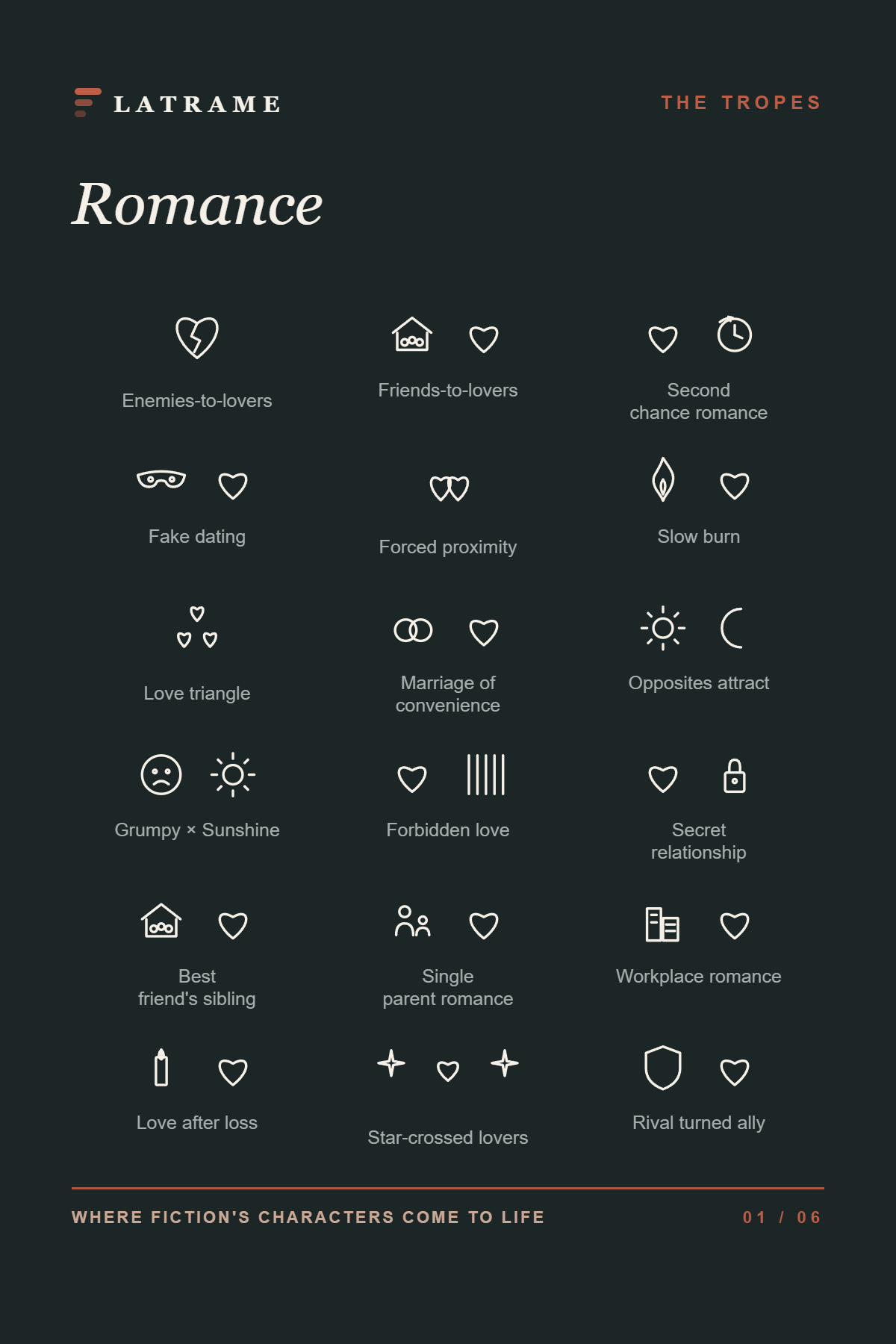
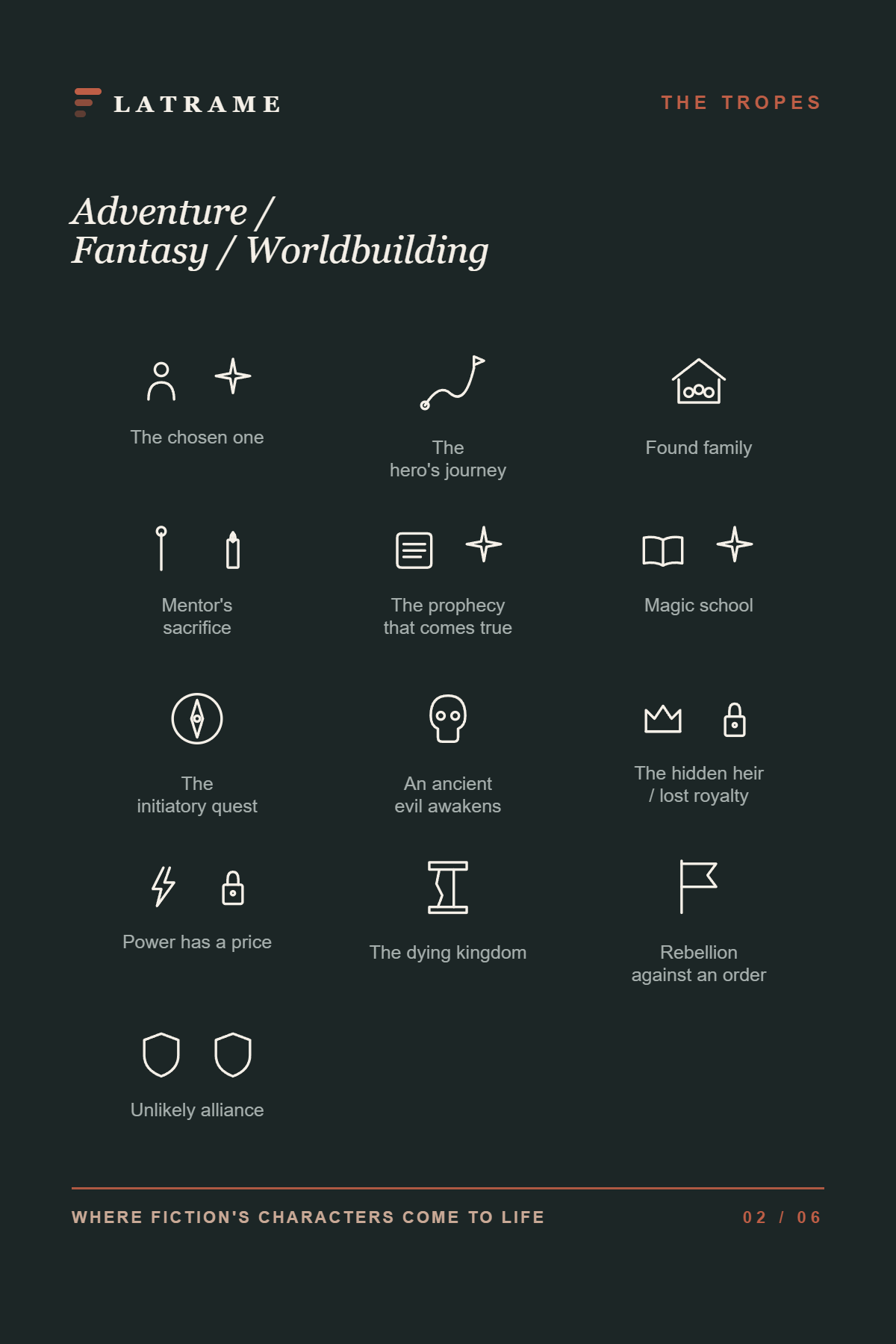
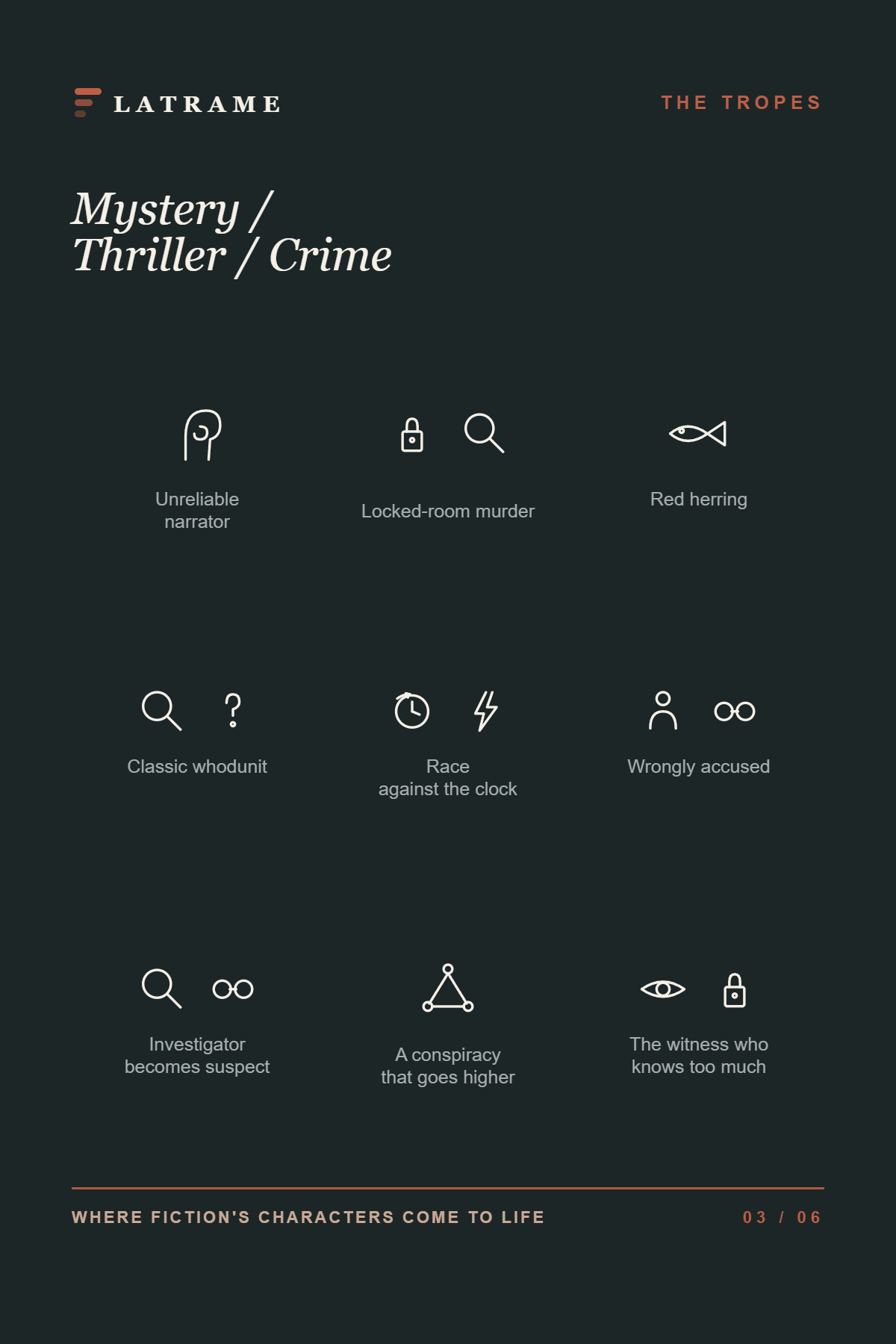
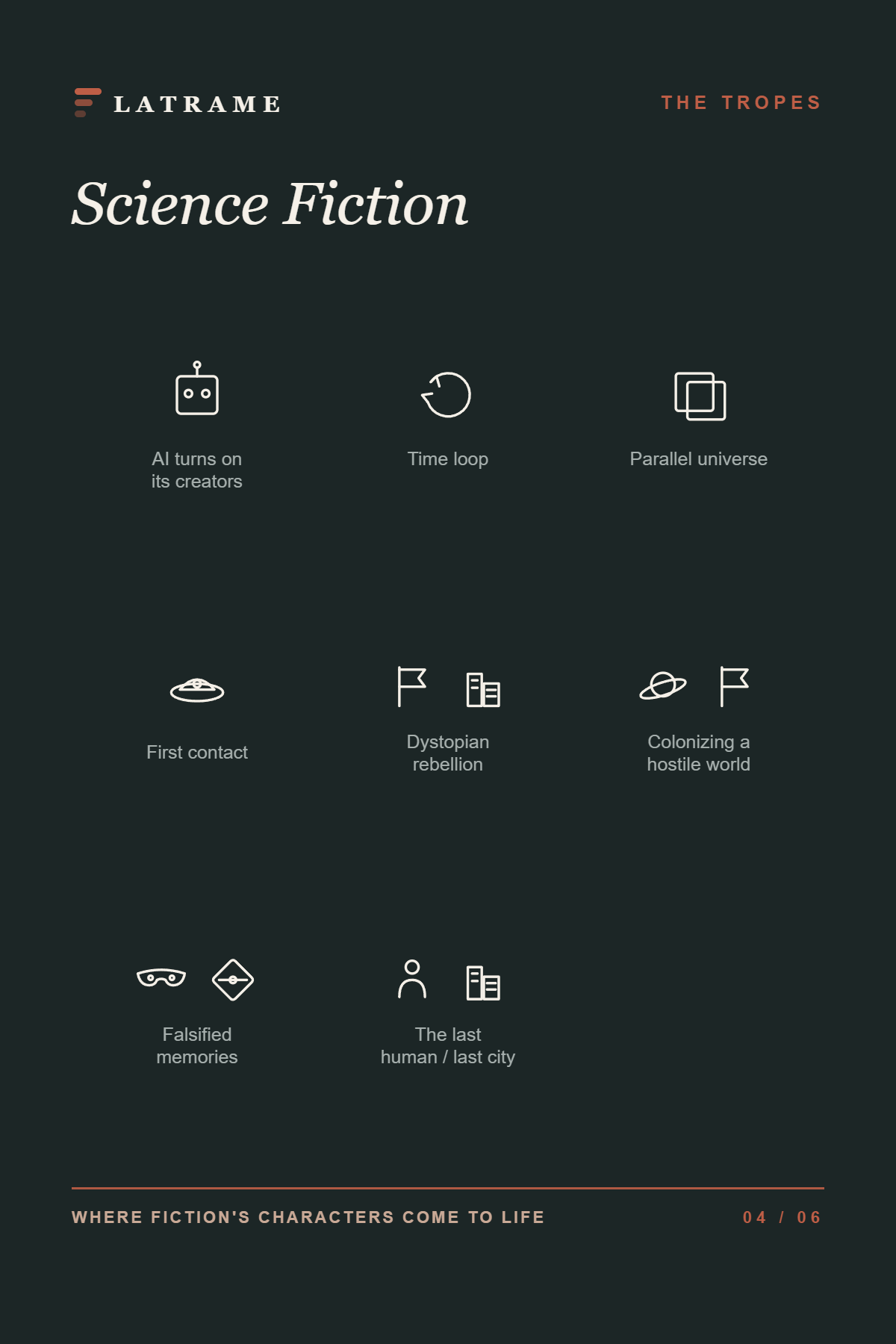
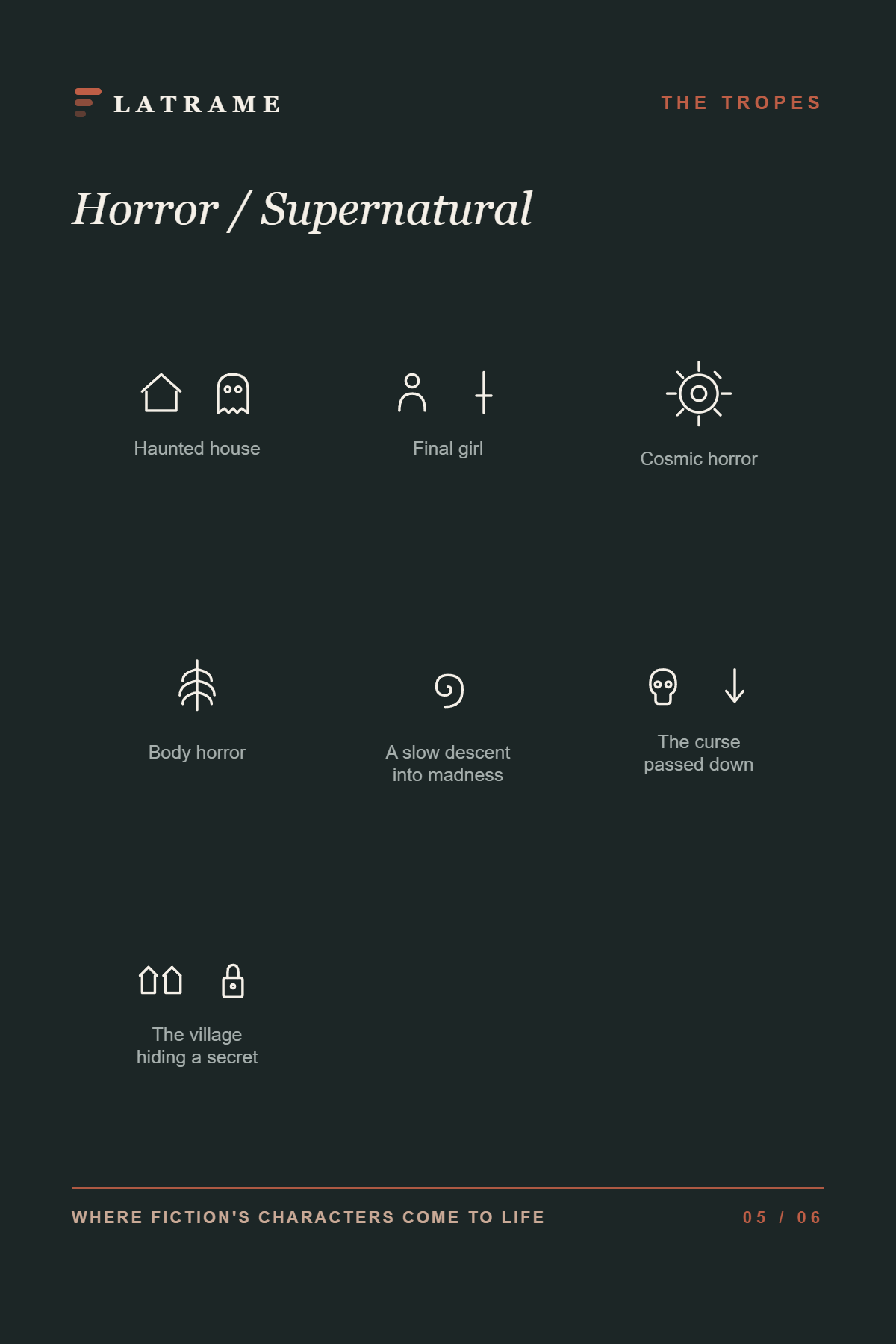
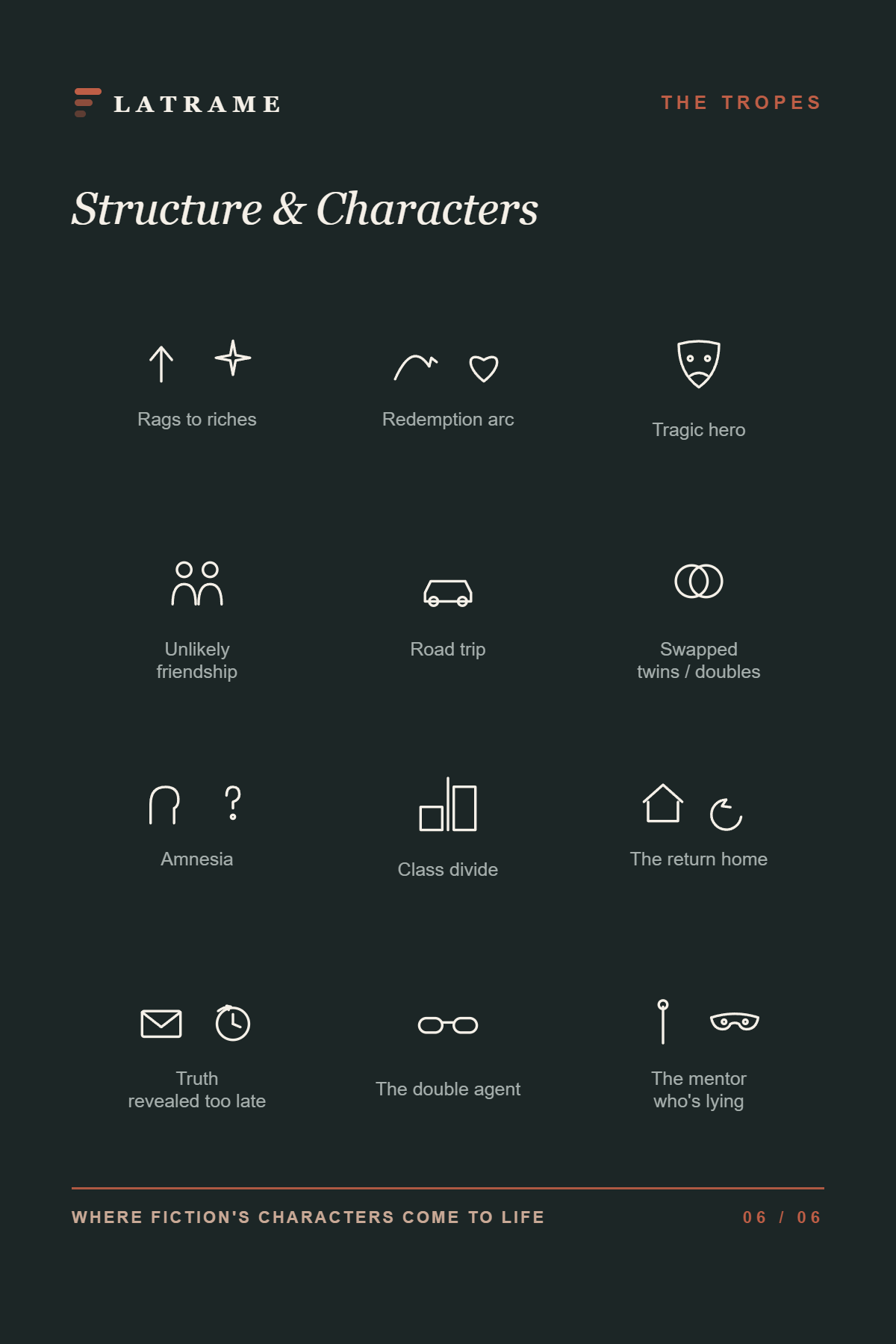
77 tropes.
To build on, or to flip on their head.
LATRAME
Between two characters, there's always an invisible thread.
Rivals, lovers, allies against their will — give it a name.
Step 7 · Relationships
What binds them.
Link two characters with a free-form label — "rival," "love interest," "reluctant ally." Every relationship shows up on both profiles, clickable, so readers understand the web without you spelling it all out.
Step 8 · The bestiary
What haunts the margins.
Not every story needs one more character — sometimes it just needs a creature no one's ever seen, a place that keeps recurring, a legend half-believed.
The bestiary doesn't post, doesn't comment. It just waits to be found, scene after scene.
LATRAME
Enough threads, and a shape starts to emerge.
Time to see your story from above.
Step 9 · The timeline
The shape your story takes.
Group your scenes by narrative thread and watch them move forward side by side on the same axis — rivalries, romances, brewing prophecies, all running in parallel.
This is where a pile of posts visibly becomes a story.
LATRAME
So. Who do you start with?
Your first character is waiting to exist.
Create my first character →